
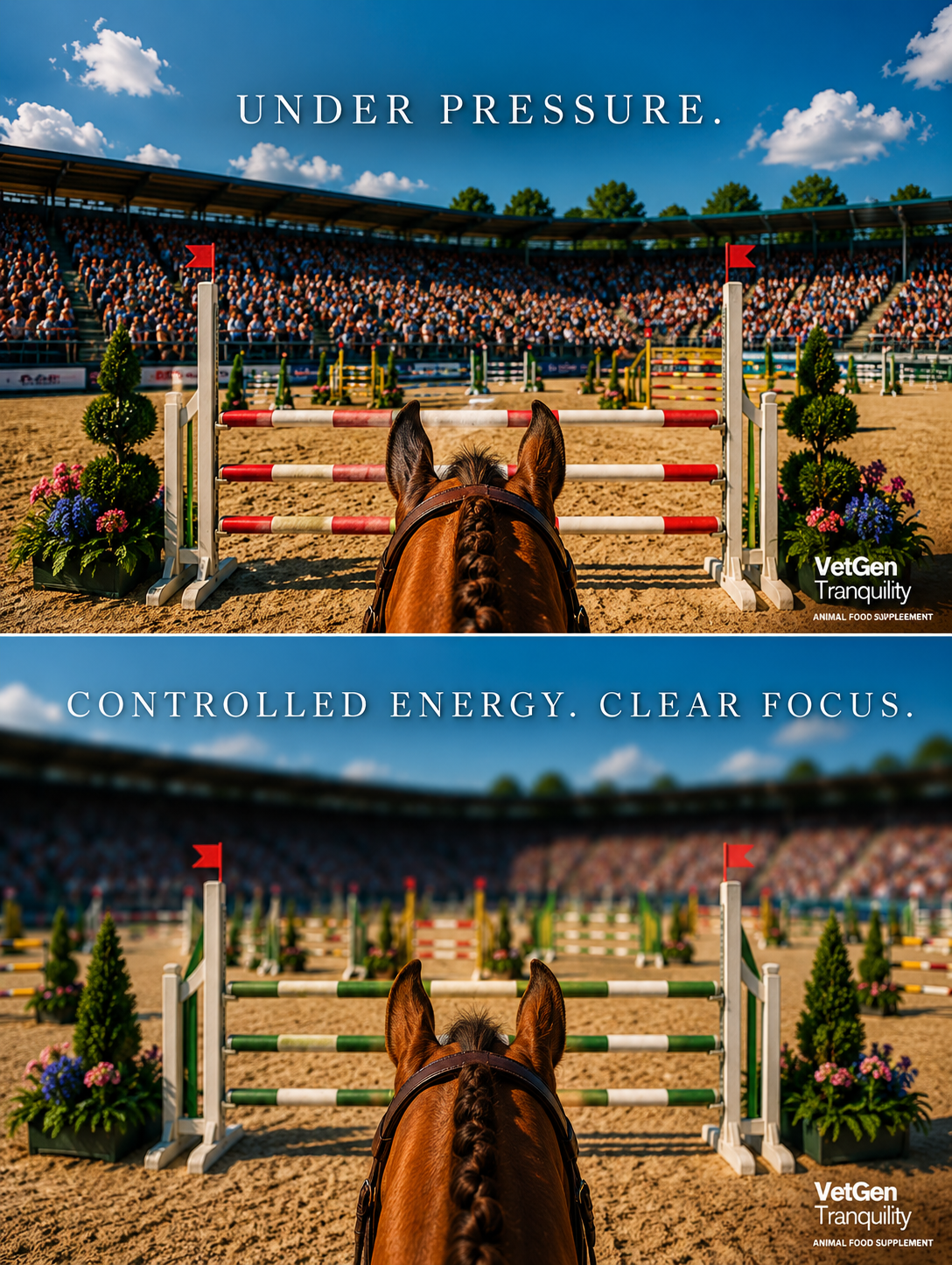
Every rider has experienced it. At home your horse feels relaxed, confident and predictable. Then competition day arrives and everything feels different. The horse becomes tense, distracted, reactive or disconnected despite being healthy and well prepared.
Many riders describe it as riding a different horse. The reality is that performance is influenced not only by physical preparation, but also by the horse's mental response to pressure. Understanding that response is the foundation of modern equine performance nutrition.
The Forgotten Side of Performance
Elite riders invest enormous effort into fitness, training and nutrition, yet mental performance is often overlooked. Horses naturally respond to unfamiliar environments, travel, loudspeakers, spectators and waiting areas. These responses are normal biological survival mechanisms, but excessive arousal can reduce concentration and consistency in the arena.
What Happens Inside the Horse's Brain?
When a horse perceives a challenge, the sympathetic nervous system becomes more active. Adrenaline and cortisol prepare the body for action by increasing alertness, heart rate and muscle readiness. These changes evolved to improve survival, but under competition conditions they may also influence focus and decision-making.
Why Focus Matters More Than Calmness
VetGen believes the objective should never be to remove athletic energy. Elite horses require power, expression and responsiveness. The goal is Controlled Energy — maintaining confidence and focus while preserving performance.
- Clear focus rather than reduced responsiveness
- Confidence rather than hesitation
- Controlled energy rather than nervous tension
Why Horses Lose Concentration
Sensory overload. Crowds, flags, loudspeakers, unfamiliar arenas and other horses create many competing stimuli.
Anticipation. Experienced horses often associate transport and warm-up routines with competition, increasing arousal before entering the ring.
Rider influence. Horses are highly sensitive to changes in breathing, posture, rein contact and rider tension.
Physical discomfort. Pain, poor saddle fit, gastric discomfort or other health issues can contribute to behavioural changes and should always be considered.
The Role of Nutrition
Nutrition cannot replace excellent horsemanship, training or veterinary care. However, a comprehensive nutrition strategy that includes gut health, hydration, forage, recovery and targeted supplementation may help support horses during demanding training and competition periods.
Introducing Equine Mental Performance
Mental performance combines confidence, composure, concentration and adaptability. Rather than asking how to make a horse quieter, VetGen asks how horses can remain mentally available when performance matters most.
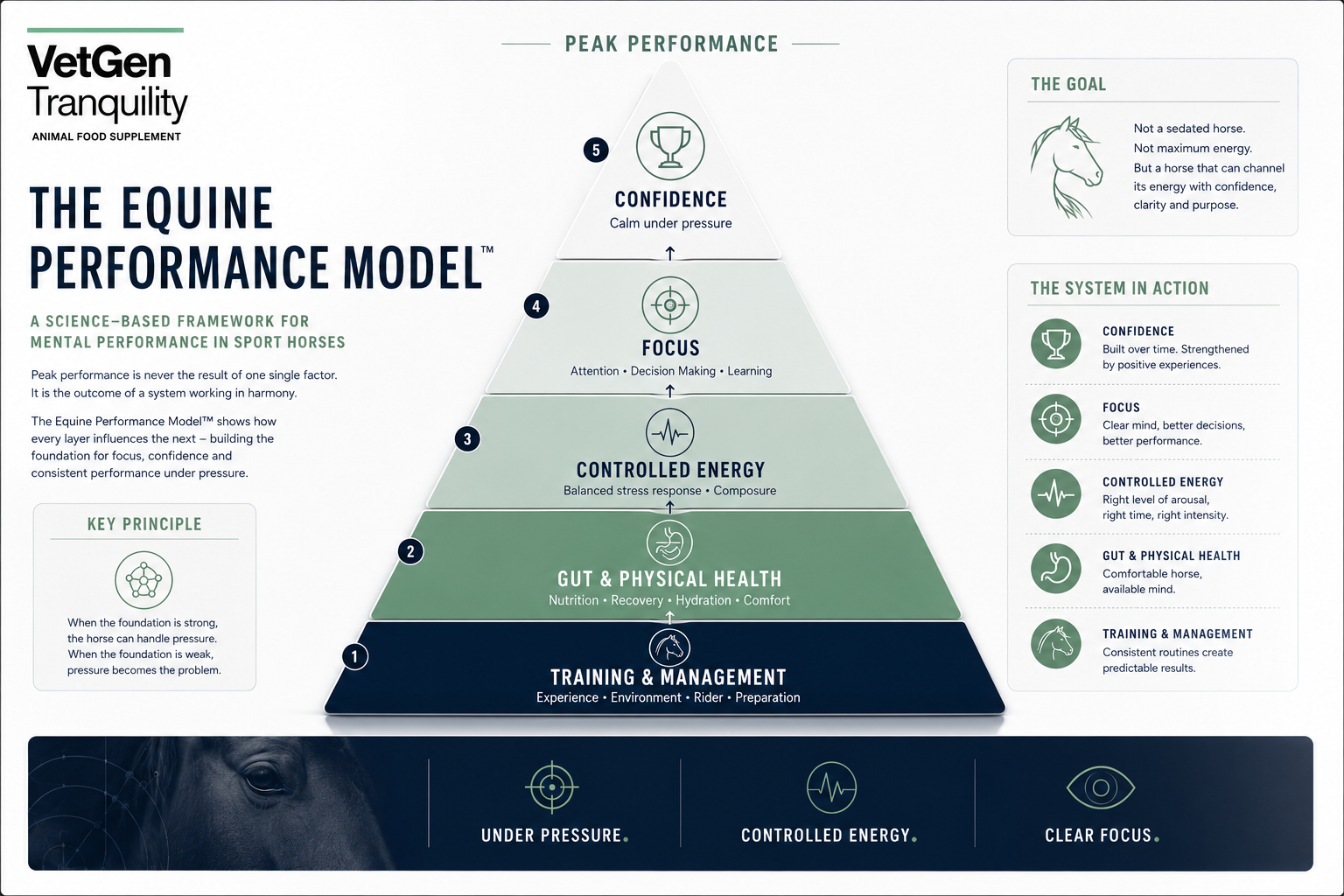
The VetGen Philosophy
Under Pressure.
Controlled Energy.
Clear Focus.
Key Takeaways
- Pressure is a normal part of equestrian sport.
- Stress responses are natural and not inherently negative.
- Excessive arousal may reduce concentration.
- Training, management, veterinary care and nutrition all contribute to performance.
- Supporting focus is often more valuable than simply reducing energy.
Frequently Asked Questions
Why does my horse perform differently at competitions?
Competition environments introduce unfamiliar stimuli that influence behaviour and focus.
Can nutrition improve focus?
Nutrition supports overall preparation but should complement training and management.
Does every horse respond the same way?
No. Temperament, previous experiences and health all influence the response.
The VetGen Expert Perspective
Championship performances are not defined by the absence of pressure, but by the ability to perform despite it. VetGen's philosophy is to support horses in maintaining composure, confidence and focus when it matters most.
Under Pressure. Controlled Energy. Clear Focus.
Scientific References
- Padalino, B. (2015). Effects of the Different Transport Phases on Equine Health Status, Behavior and Welfare. Journal of Veterinary Behavior.
- Thomson-Parker, T. L. et al. (2023). Impact of Oral Phytozen EQ Supplementation on Plasma Cortisol and Behavior Responses of Young Horses Exposed to Stressful Stimuli. Animals, MDPI.
- McGreevy, P. & McLean, A. Equitation Science.
- International Society for Equitation Science (ISES) resources. equitationscience.com.