
Introduction
Magnesium is one of the most important yet frequently misunderstood minerals in equine nutrition. It plays a vital role in muscle contraction and relaxation, nerve transmission, energy metabolism, skeletal development, electrolyte balance and hundreds of enzymatic reactions throughout the horse's body. Despite its importance, magnesium is often promoted as a universal solution for nervous behaviour, muscle tension or poor performance without considering whether supplementation is actually necessary.
Scientific evidence paints a far more nuanced picture. Magnesium is essential for every horse, but supplementation is most beneficial when dietary intake is insufficient or physiological requirements are increased. Not every anxious horse is magnesium deficient, and not every horse receiving magnesium supplementation will become calmer.
Understanding the role of magnesium requires looking beyond marketing claims and examining the science behind equine physiology.
This comprehensive guide explains how magnesium functions within the horse's body, when supplementation may be appropriate, how deficiency develops, which magnesium sources are most suitable and what current research tells us about magnesium's influence on behaviour, performance and recovery.
Table of Contents
- Why Magnesium Matters
- Magnesium in the Equine Body
- Muscle Function
- Nervous System Function
- Energy Production
- Bone Health
- Electrolyte Balance
- Magnesium Deficiency
- Causes of Deficiency
- Does Magnesium Calm Horses?
- Scientific Evidence
- Types of Magnesium
- Daily Magnesium Requirements for Horses
- Can Horses Receive Too Much Magnesium?
- Magnesium Interactions with Other Minerals
- Choosing a High-Quality Magnesium Supplement
- Common Myths About Magnesium
- Frequently Asked Questions
- Key Takeaways
- Practical Recommendations
- Conclusion
- About VetGen Academy
Why Magnesium Matters
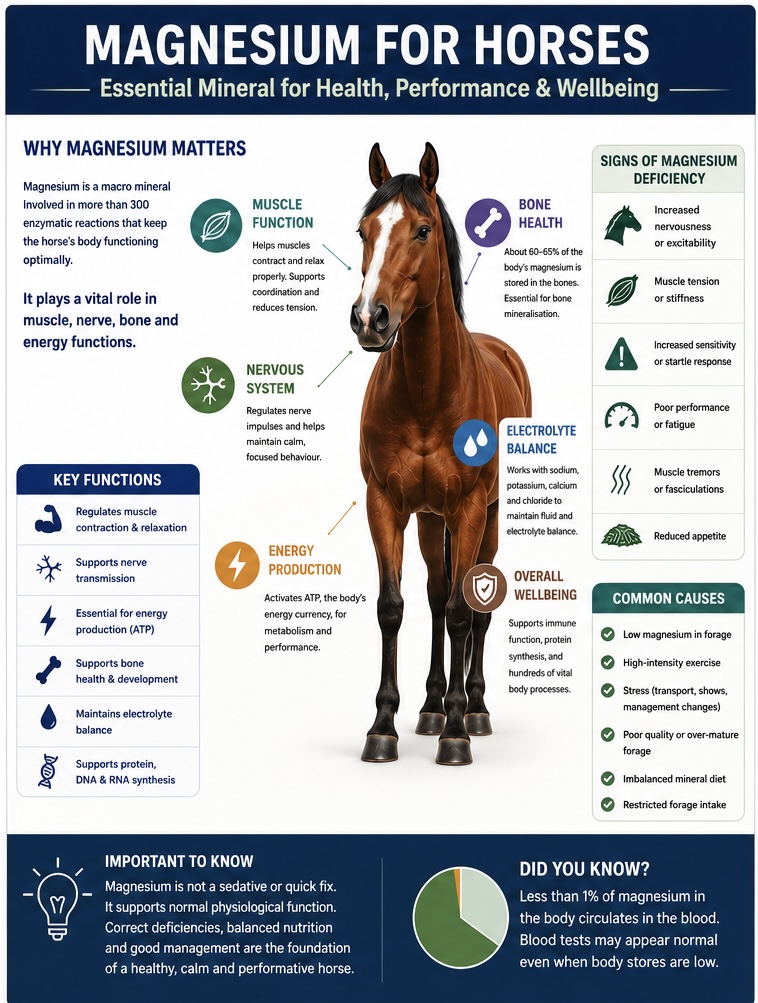
Magnesium is classified as a macro mineral because horses require relatively large quantities every day. Although calcium and phosphorus often receive greater attention, magnesium is equally essential for maintaining normal physiological function.
Approximately 60–65% of the body's magnesium is stored within the skeleton, where it contributes to bone structure and mineral homeostasis. Most of the remaining magnesium is found inside muscle cells and soft tissues, while less than 1% circulates in the bloodstream.
This small percentage in blood has important clinical implications. Blood magnesium concentrations often remain within normal limits despite depleted body stores, meaning a normal blood test does not necessarily exclude marginal magnesium deficiency.
Magnesium participates in more than 300 enzymatic reactions, making it one of the most metabolically active minerals in the equine body.
Its primary functions include:
- Regulation of muscle contraction and relaxation
- Transmission of nerve impulses
- Cellular energy production
- Protein synthesis
- DNA and RNA synthesis
- Bone mineralisation
- Glucose metabolism
- Electrolyte regulation
- Cardiovascular function
Without adequate magnesium, these systems cannot function optimally.
Magnesium in the Equine Body
Unlike vitamins that may act through one specific pathway, magnesium acts as a cofactor in numerous biochemical reactions.
Most notably, magnesium activates adenosine triphosphate (ATP), the body's universal energy molecule. ATP cannot efficiently deliver energy unless it is bound to magnesium.
This means that every muscle contraction, nerve impulse and metabolic reaction depends — directly or indirectly — on adequate magnesium availability.
Rather than functioning as a stimulant or sedative, magnesium serves as a regulator that allows normal physiological processes to occur efficiently.
Magnesium and Muscle Function
One of magnesium's most recognised roles involves muscle physiology.
Muscle contraction occurs when calcium enters muscle fibres and initiates interaction between actin and myosin proteins. Relaxation requires calcium to leave these binding sites.
Magnesium supports this relaxation process by regulating calcium movement across cell membranes and influencing calcium channels within muscle cells.
Consequently, magnesium contributes to:
- Smooth muscle contraction
- Normal muscle relaxation
- Neuromuscular coordination
- Reduced muscle excitability
Insufficient magnesium availability may contribute to increased muscular tension, reduced comfort during exercise or impaired recovery, although these signs are not specific to magnesium deficiency and may result from numerous nutritional or medical conditions.
Magnesium and the Nervous System
Magnesium also plays a critical role within the nervous system.
Nerve cells communicate through electrical signals generated by controlled movement of sodium, potassium and calcium across cell membranes. Magnesium helps regulate these movements and acts as a natural modulator of neuronal excitability.
One particularly important mechanism involves magnesium's interaction with NMDA (N-methyl-D-aspartate) receptors. These receptors participate in learning, memory and nervous system stimulation. Adequate magnesium helps prevent excessive activation of these receptors, supporting normal neurological function.
This biological mechanism has led researchers to investigate whether magnesium supplementation may influence behavioural responses in horses experiencing stress or increased excitability.
However, physiological plausibility does not automatically translate into clinically meaningful behavioural effects. Current research remains mixed, highlighting the importance of interpreting scientific evidence carefully rather than relying on anecdotal reports.
Magnesium and Energy Production
Energy metabolism represents another essential function of magnesium.
ATP serves as the body's energy currency. Yet biologically active ATP almost always exists as magnesium-ATP.
Without magnesium, ATP cannot effectively drive the biochemical reactions required for:
- Muscle contraction
- Protein synthesis
- Cellular repair
- Recovery
- Metabolic regulation
Performance horses therefore require sufficient magnesium not because it provides energy itself, but because it enables the body to use energy efficiently.
Magnesium and Bone Health
Around two-thirds of total body magnesium resides within the skeleton.
Magnesium contributes to:
- Bone formation
- Mineral storage
- Skeletal strength
- Calcium regulation
Bone health depends upon an appropriate balance between:
- Calcium
- Phosphorus
- Magnesium
- Vitamin D
Providing excessive amounts of one mineral while neglecting another may disrupt this balance. For growing horses and broodmares, maintaining appropriate mineral ratios is generally more important than maximising individual nutrient intake.
Magnesium and Electrolyte Balance
Magnesium interacts closely with sodium, potassium, chloride and calcium to maintain fluid balance and cellular function.
Sweating results in electrolyte loss. Although sodium and chloride losses greatly exceed magnesium losses, prolonged exercise combined with inadequate dietary intake may gradually influence magnesium status.
For endurance horses, eventers and racehorses, magnesium should therefore be considered within the broader context of electrolyte management rather than viewed as an isolated nutrient.
Magnesium Deficiency
True clinical magnesium deficiency is relatively uncommon in horses consuming balanced diets. However, marginal deficiencies may develop under specific conditions, particularly when dietary intake fails to meet physiological requirements.
Potential signs associated with inadequate magnesium status include:
- Increased nervousness
- Heightened sensitivity
- Muscle tension
- Reduced exercise tolerance
- Poor recovery
- Muscle fasciculations
- Reduced appetite
- Mild behavioural changes
Importantly, none of these signs are specific to magnesium deficiency. Pain, gastric ulcers, musculoskeletal disorders, poor training, inadequate forage quality, electrolyte imbalances and numerous medical conditions may produce similar clinical signs.
Consequently, magnesium supplementation should never replace thorough veterinary evaluation when behavioural or performance changes occur.
Common Causes of Magnesium Deficiency
Several factors may increase magnesium requirements or reduce intake. These include:
Low Dietary Intake
Forage magnesium concentrations vary depending on:
- Soil composition
- Fertilisation
- Plant species
- Stage of maturity
Poor-quality forage may provide less magnesium than expected.
Heavy Exercise
Performance horses experience increased metabolic demand. Although magnesium losses through sweat remain relatively modest compared with sodium and chloride, prolonged exercise may increase overall requirements.
High Stress
Transport, competition, environmental change and illness increase physiological stress. Stress influences numerous hormonal pathways and may indirectly alter mineral metabolism.
Imbalanced Diets
Excessive dietary calcium, phosphorus or potassium may influence magnesium absorption under certain circumstances. Balanced ration formulation therefore remains essential.
Limited Forage Intake
Restricting forage for weight management may inadvertently reduce magnesium intake if concentrates are not appropriately balanced.
Does Magnesium Calm Horses?
This is perhaps the most frequently asked question in equine nutrition.
The short answer is: sometimes — but not always.
Magnesium is not a sedative. It does not suppress behaviour in the same way as pharmaceutical tranquilising agents. Instead, magnesium supports normal neurological function.
If behavioural changes arise partly because magnesium intake is inadequate, correcting that deficiency may improve neuromuscular function and reduce excessive excitability.
However, if a horse's behaviour results from:
- Pain
- Gastric ulcers
- Poor training
- Environmental stress
- Inappropriate management
- Orthopaedic disease
magnesium supplementation alone is unlikely to resolve the underlying issue.
Owners should therefore avoid viewing magnesium as a universal behavioural solution. A comprehensive assessment always remains the best approach.
Scientific Evidence: What Does Research Say About Magnesium Supplementation?
Magnesium is one of the most extensively discussed minerals in equine nutrition. However, the scientific literature often presents a more measured perspective than the claims commonly found in advertisements or online forums. While magnesium is undeniably essential for normal physiological function, current research suggests that supplementation primarily benefits horses with an inadequate dietary intake or increased physiological requirements rather than acting as a universal performance or calming aid.
Understanding the evidence requires distinguishing between correcting a deficiency and providing additional magnesium to horses that already receive adequate amounts.
Magnesium and Behaviour
Behavioural changes are one of the most common reasons owners begin magnesium supplementation. Horses described as "hot," "sharp," "spooky," or "over-reactive" are frequently assumed to be magnesium deficient. Although there is a physiological basis for magnesium influencing the nervous system, research indicates that the relationship is considerably more complex.
Magnesium contributes to normal nerve impulse transmission and helps regulate neuronal excitability by influencing calcium movement across cell membranes and modulating NMDA (N-methyl-D-aspartate) receptors. These receptors play an important role in learning, memory, stress responses, and the processing of sensory information. In theory, inadequate magnesium availability may increase neuronal excitability, potentially contributing to heightened responsiveness.
However, controlled studies have produced inconsistent results.
Several investigations have reported modest reductions in behavioural reactivity following magnesium supplementation, particularly in horses exposed to transportation, novel environments, or competition. Other studies, however, found little or no measurable improvement in temperament when horses were already consuming diets that met their nutritional requirements.
These differences are not surprising. Behaviour is influenced by a wide range of factors, including:
- Genetics
- Previous training
- Rider experience
- Pain
- Gastric ulcers
- Environmental management
- Social interactions
- Exercise routines
- Overall health status
Because behaviour is multifactorial, magnesium should never be viewed as a substitute for appropriate management or veterinary investigation.
Magnesium and Muscle Function
The relationship between magnesium and muscle physiology is considerably stronger than its association with behaviour.
Magnesium is directly involved in regulating muscle contraction and relaxation. Calcium initiates contraction, while magnesium facilitates relaxation by helping control intracellular calcium concentrations. This balance is fundamental for smooth and coordinated movement.
Experimental studies demonstrate that magnesium deficiency can increase neuromuscular excitability, potentially leading to muscle tremors, stiffness, and reduced relaxation.
For performance horses, maintaining adequate magnesium intake may therefore support:
- Normal muscle relaxation
- Efficient neuromuscular coordination
- Reduced muscular tension
- Improved recovery after exercise
It is important to recognise, however, that muscle soreness or poor recovery can also result from inadequate conditioning, excessive training load, dehydration, electrolyte imbalance, viral illness, or orthopaedic disease. Magnesium should therefore be considered one component of a comprehensive nutritional and training programme rather than a standalone solution.
Magnesium and Exercise Performance
One of the more interesting areas of research concerns magnesium's influence on athletic performance.
Because magnesium is required for ATP activation, it has been suggested that increasing magnesium intake could improve endurance, reduce fatigue, and enhance exercise capacity.
Current evidence does not support dramatic performance improvements in horses that already consume nutritionally balanced diets.
Instead, research suggests that adequate magnesium status helps maintain normal metabolic function during exercise. Horses that develop marginal deficiencies may experience reduced efficiency of energy metabolism, but supplementing horses with already adequate magnesium stores does not appear to provide substantial additional benefits.
In other words, magnesium helps restore normal physiological function when intake is insufficient rather than acting as an ergogenic performance enhancer.
Magnesium and Recovery
Recovery following intense exercise depends upon numerous physiological processes, including muscle repair, glycogen replenishment, inflammation control, hydration, and electrolyte restoration.
Magnesium contributes indirectly to several of these mechanisms by supporting cellular energy production, protein synthesis, and neuromuscular function.
Although there is limited evidence that magnesium supplementation alone accelerates recovery, ensuring adequate magnesium intake remains an important component of nutritional support for athletic horses, particularly those engaged in frequent competition or prolonged endurance exercise.
Magnesium and Metabolic Health
Recent research has also explored magnesium's role in glucose metabolism and insulin sensitivity.
In other species, magnesium deficiency has been associated with impaired insulin signalling and altered carbohydrate metabolism.
Although equine research remains relatively limited, magnesium is believed to contribute to normal insulin receptor function and glucose utilisation.
For horses affected by Equine Metabolic Syndrome (EMS) or insulin dysregulation, correcting nutritional deficiencies — including magnesium where appropriate — may support overall metabolic health. However, magnesium supplementation should not be considered a treatment for metabolic disease and should always be incorporated within a broader veterinary management plan.
Diagnosing Magnesium Deficiency
Diagnosing magnesium deficiency in horses is more challenging than many owners realise.
Unlike certain nutrients that circulate freely in the bloodstream, approximately 99% of the body's magnesium is stored within bones and soft tissues. Less than one percent is present in blood plasma.
As a result, blood magnesium concentrations often remain within the normal reference range even when total body stores are reduced.
This makes routine blood testing relatively insensitive for identifying marginal deficiency.
Veterinarians typically consider multiple factors when evaluating magnesium status, including:
- Dietary analysis
- Forage quality
- Clinical history
- Exercise level
- Medical conditions
- Laboratory findings
- Overall nutritional balance
Rather than relying solely on laboratory values, magnesium status should always be interpreted within the context of the horse's complete nutritional programme.
Types of Magnesium Used in Horse Supplements
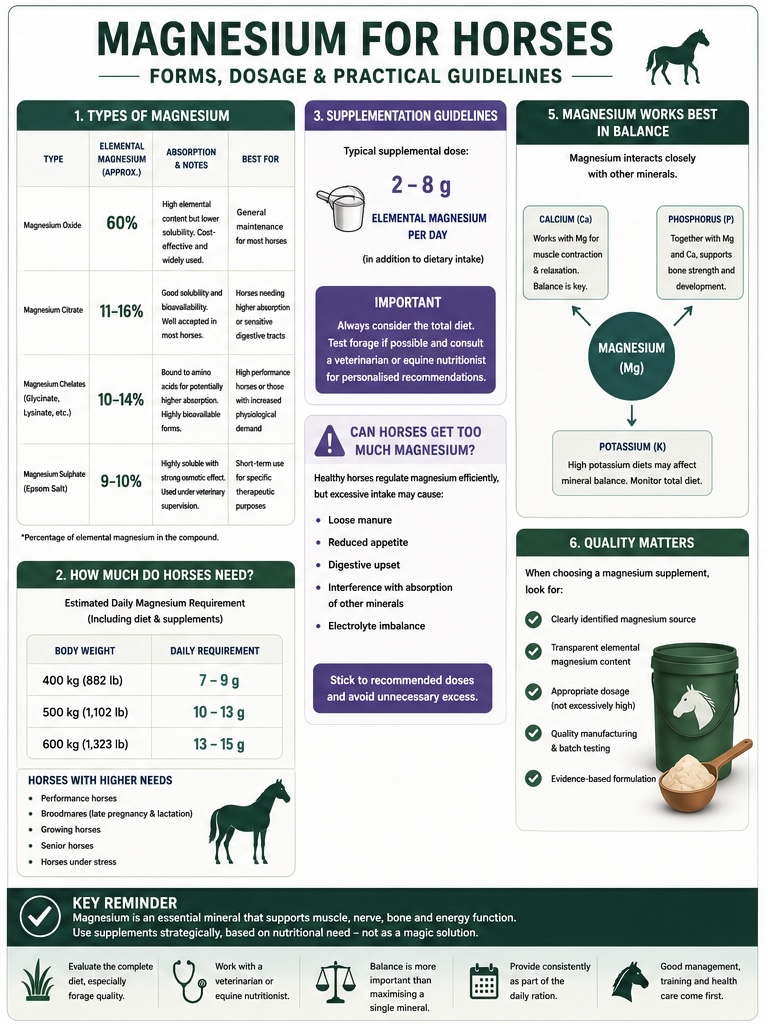
Not all magnesium supplements are created equal.
The source of magnesium influences both the amount of elemental magnesium supplied and, more importantly, how efficiently the mineral is absorbed by the digestive tract.
Manufacturers often advertise the total weight of a magnesium compound, but this figure alone provides little useful information. Two supplements may contain the same weight of magnesium compound while delivering substantially different amounts of absorbable elemental magnesium.
Understanding the different forms helps owners make informed decisions when comparing products.
Magnesium Oxide
Magnesium oxide is the most commonly used source in equine supplements.
Advantages include:
- High concentration of elemental magnesium
- Excellent stability
- Cost-effective
- Widely available
Its primary disadvantage is relatively lower solubility compared with some organic magnesium salts. Nevertheless, research suggests that magnesium oxide remains an effective source of dietary magnesium for horses when included at appropriate levels within balanced formulations.
For many horses, magnesium oxide represents a practical and scientifically supported option.
Magnesium Citrate
Magnesium citrate is an organic magnesium salt with relatively good solubility and absorption characteristics.
Potential advantages include:
- Good bioavailability
- Highly soluble
- Often well accepted in feeds
Because it contains less elemental magnesium per gram than magnesium oxide, larger quantities are generally required to deliver the same amount of magnesium.
Magnesium Chelates
Chelated magnesium refers to magnesium bound to amino acids or peptides.
Examples include:
- Magnesium glycinate
- Magnesium lysinate
- Magnesium proteinate
Chelated forms are often marketed as having superior absorption.
Although studies in humans suggest certain chelated forms may offer improved bioavailability under specific circumstances, equine research remains comparatively limited. At present, there is insufficient evidence to conclude that chelated magnesium consistently outperforms well-formulated inorganic sources in healthy horses.
Magnesium Sulphate (Epsom Salt)
Magnesium sulphate is widely recognised as Epsom salt.
While it supplies magnesium, it also has pronounced osmotic effects within the gastrointestinal tract and is therefore primarily used under veterinary supervision rather than as a routine nutritional supplement.
It should not be considered an everyday source of dietary magnesium without professional guidance.
Daily Magnesium Requirements for Horses
Determining a horse's magnesium requirement is more complex than applying a single number to every animal. Daily needs vary according to body weight, forage quality, workload, physiological status and the overall composition of the diet.
The National Research Council (NRC) provides nutritional recommendations based on maintaining normal physiological function rather than maximising athletic performance. These recommendations serve as an excellent foundation for ration formulation, although individual horses may require adjustments depending on their circumstances.
General Daily Magnesium Requirements
The following values represent approximate daily magnesium requirements for healthy adult horses.
| Horse | Estimated Daily Magnesium Requirement |
|---|---|
| 400 kg (882 lb) adult horse | 7–9 g |
| 500 kg (1,102 lb) adult horse | 10–13 g |
| 600 kg (1,323 lb) adult horse | 13–15 g |
These figures include magnesium supplied by forage, concentrates and any supplements.
It is important to recognise that many horses already receive sufficient magnesium through a balanced forage-based diet. Supplementation should therefore complement the existing ration rather than replace proper nutritional planning.
Horses That May Require Increased Magnesium Intake
Certain horses have higher nutritional demands than others.
Performance Horses
Intense exercise increases metabolic activity throughout the body. While sweat losses of magnesium are relatively small compared with sodium and chloride, repeated training sessions increase the importance of maintaining adequate magnesium intake.
Performance horses involved in disciplines such as:
- Show Jumping
- Dressage
- Eventing
- Endurance
- Racing
- Reining
- Polo
often benefit from careful monitoring of their overall mineral intake as part of a complete performance nutrition programme.
Broodmares
Pregnancy and lactation substantially increase nutrient requirements.
Developing foals require magnesium for skeletal growth, while milk production places additional demands on the mare's nutrient reserves.
Balanced mineral nutrition during pregnancy supports both maternal health and foal development.
Growing Horses
Foals and young horses experience rapid skeletal growth.
Magnesium contributes to:
- Bone mineralisation
- Cartilage development
- Protein synthesis
- Cellular growth
Young horses should receive appropriately balanced mineral nutrition rather than excessive supplementation of individual nutrients.
Senior Horses
Older horses may experience changes in digestive efficiency, forage utilisation and overall nutrient absorption.
Although research specifically examining magnesium absorption in aged horses remains limited, ensuring adequate mineral intake remains an important aspect of senior horse nutrition.
How Much Magnesium Should You Supplement?
This is perhaps the most common question horse owners ask.
The answer depends entirely on one factor:
How much magnesium is already present in the horse's diet?
Without evaluating forage, concentrates and existing supplements, it is impossible to recommend an appropriate supplemental dose.
Adding magnesium "just in case" may not provide additional benefits if dietary intake already meets physiological requirements.
Instead, supplementation should aim to bridge nutritional gaps.
As a general guideline, supplemental magnesium often contributes between 2 and 8 grams of elemental magnesium per day, depending on the horse's existing intake and nutritional needs.
However, supplementation strategies should ideally be based on:
- Forage analysis
- Complete ration evaluation
- Veterinary advice
- Consultation with an equine nutritionist
Can Horses Receive Too Much Magnesium?
Like every nutrient, magnesium follows the principle that more is not necessarily better.
Although magnesium has a relatively wide safety margin compared with many trace minerals, excessive supplementation should still be avoided.
Healthy horses regulate magnesium absorption efficiently through the digestive tract and kidneys. When dietary intake increases, intestinal absorption decreases and urinary excretion rises.
Nevertheless, extremely high magnesium intake may produce undesirable effects.
Potential consequences include:
- Loose manure
- Reduced feed intake
- Digestive disturbances
- Interference with the absorption of other minerals
- Electrolyte imbalance
These effects generally occur only at intake levels substantially above normal nutritional recommendations.
Owners should therefore resist the temptation to continually increase supplementation simply because behavioural improvements are not immediately observed.
More magnesium does not necessarily produce a calmer horse.
Magnesium Interactions with Other Minerals
Magnesium does not function independently.
Its absorption and physiological effects are closely linked to several other minerals, particularly calcium, phosphorus and potassium.
Calcium
Calcium and magnesium work together throughout the nervous system and muscles.
Calcium initiates muscle contraction.
Magnesium supports muscle relaxation.
Neither mineral is more important than the other; both must remain in appropriate balance.
Excessive supplementation of either mineral without considering the overall diet may disturb this balance.
Phosphorus
Magnesium contributes to skeletal health alongside phosphorus and calcium.
For growing horses, maintaining appropriate ratios between these minerals is considerably more important than maximising individual intake.
Potassium
High-potassium forage—particularly lush spring pasture or certain heavily fertilised grasses—may influence mineral metabolism and should always be considered when evaluating the overall diet.
Choosing a High-Quality Magnesium Supplement
With hundreds of equine supplements available worldwide, selecting an appropriate product can be challenging.
Marketing claims often focus on dramatic behavioural improvements, yet the quality of a supplement depends far more on formulation than promotional language.
When evaluating a magnesium supplement, consider the following factors.
1. Clearly Identified Magnesium Source
Reputable manufacturers specify exactly which magnesium compound is used.
Examples include:
- Magnesium oxide
- Magnesium citrate
- Magnesium glycinate
Vague descriptions such as "magnesium complex" provide little useful information.
2. Transparent Elemental Magnesium Content
The amount of elemental magnesium—not simply the weight of the compound—is what matters nutritionally.
Products should clearly state the quantity of elemental magnesium supplied per serving.
3. Appropriate Dosage
More is not always better.
Avoid products that promote excessively high daily intakes without scientific justification.
A well-formulated supplement should complement the horse's existing diet rather than overwhelm it.
4. Quality Manufacturing Standards
Choose supplements manufactured under recognised quality assurance systems.
Look for companies that demonstrate:
- Batch consistency
- Ingredient traceability
- Quality control procedures
- Independent testing where appropriate
Reliable manufacturing standards help ensure that the product consistently contains what the label declares.
5. Evidence-Based Formulation
The strongest supplements are developed around nutritional science rather than marketing trends.
Products should contain ingredients at meaningful inclusion rates supported by current evidence, rather than long ingredient lists with minimal amounts of each component.
Common Myths About Magnesium
Myth 1: Every Nervous Horse Needs Magnesium
False.
Behavioural issues may arise from pain, ulcers, poor management, inadequate training, environmental stress or underlying medical conditions.
Magnesium is only one possible piece of a much larger picture.
Myth 2: Magnesium Is a Natural Sedative
False.
Magnesium supports normal neurological function.
It does not chemically sedate horses.
Myth 3: More Magnesium Always Produces Better Results
False.
Once nutritional requirements are met, additional supplementation is unlikely to provide further physiological benefits.
Myth 4: Blood Tests Always Detect Magnesium Deficiency
False.
Because less than one percent of total body magnesium circulates in the bloodstream, blood concentrations may remain normal despite reduced tissue stores.
Diagnosis should always consider dietary history and clinical evaluation rather than laboratory values alone.
Understanding First.
Supplementation Second.
The VetGen Perspective
At VetGen, we view magnesium not as a shortcut to calmness, but as an essential nutrient that supports the systems on which every horse depends: muscle, nervous function, energy metabolism and recovery.
The most meaningful improvements come when supplementation is guided by science, matched to the horse's actual needs, and integrated within an overall programme of excellent management, nutrition and veterinary care.
Frequently Asked Questions
Can horses become deficient in magnesium?
Yes, although true clinical magnesium deficiency is relatively uncommon in healthy horses receiving balanced diets. Marginal deficiencies may occur when dietary intake is inadequate, forage quality is poor, or physiological demands increase through growth, lactation, intensive exercise, or prolonged stress. Because deficiency develops gradually and the clinical signs are often non-specific, it should always be assessed in the context of the horse's entire diet and management.
Is magnesium safe for competition horses?
Magnesium itself is not prohibited under FEI regulations and is an essential dietary mineral. However, horse owners should always ensure that any supplement used in competition complies with the regulations of the relevant governing body and is manufactured to high quality standards with appropriate quality control.
How long does it take to notice results?
If a horse has an inadequate magnesium intake, improvements in muscle function or general wellbeing may become noticeable within several weeks after correcting the deficiency. Behavioural changes, when they occur, are usually gradual rather than immediate. It is unrealistic to expect dramatic improvements within a few days, particularly if the underlying cause of the horse's behaviour is unrelated to magnesium nutrition.
Can magnesium replace proper training?
No. Nutrition supports physiology — it does not replace horsemanship. Training, management, pain assessment, saddle fit, dental care, gastric health and appropriate exercise remain the foundations of a relaxed and willing performance horse.
Should every horse receive a magnesium supplement?
Not necessarily. Many horses consuming good-quality forage together with a balanced vitamin and mineral programme already receive sufficient magnesium. Supplementation should be based on nutritional need rather than routine.
Which horses are most likely to benefit?
Magnesium supplementation may be appropriate for horses that consume forage with relatively low magnesium concentrations, have increased physiological demands due to intensive work, are broodmares during late pregnancy or lactation, are growing young horses requiring carefully balanced mineral nutrition, or have diets identified by a veterinarian or equine nutritionist as providing insufficient magnesium.
Can magnesium prevent tying-up?
No supplement can completely prevent exertional rhabdomyolysis (tying-up). However, maintaining adequate magnesium intake contributes to normal muscle physiology and should be considered one component of an overall nutritional strategy that includes balanced electrolytes, appropriate conditioning, adequate energy intake, and veterinary management where necessary.
Should magnesium be given every day?
If supplementation is required, magnesium is generally most effective when provided consistently as part of the horse's daily ration rather than intermittently before competitions.
Key Takeaways
Magnesium is an indispensable mineral involved in hundreds of metabolic processes throughout the horse's body. From muscle contraction and nerve transmission to energy production and skeletal health, adequate magnesium intake is essential for maintaining normal physiological function.
Despite its popularity as a calming supplement, current scientific evidence indicates that magnesium is not a universal behavioural solution. Horses that already receive sufficient dietary magnesium are unlikely to experience dramatic improvements simply through additional supplementation. Conversely, horses with marginal deficiencies may benefit from restoring an appropriate intake.
The most successful nutritional programmes are those that evaluate the entire diet rather than focusing on a single ingredient.
Practical Recommendations
Before introducing a magnesium supplement, horse owners should consider the following checklist:
- ✓Evaluate the complete diet, including forage, concentrates and existing supplements.
- ✓Avoid assuming that nervous behaviour automatically indicates magnesium deficiency.
- ✓Work with a veterinarian or qualified equine nutritionist when assessing nutritional needs.
- ✓Select supplements manufactured under recognised quality assurance systems.
- ✓Choose products that clearly state both the magnesium source and the amount of elemental magnesium provided.
- ✓Remember that nutrition supports performance — it cannot replace correct management, training or veterinary care.
Conclusion
Magnesium is one of the most important minerals in equine nutrition, yet it is also one of the most misunderstood.
Its biological importance is unquestionable. Every heartbeat, muscle contraction, nerve impulse and metabolic reaction depends upon adequate magnesium availability. Without sufficient intake, normal physiological function cannot be maintained.
However, the scientific literature also makes one point equally clear: magnesium should not be viewed as a cure-all.
Behavioural problems, reduced performance or poor recovery rarely result from a single nutritional factor. Successful management requires a holistic approach that considers training, forage quality, veterinary health, exercise, environment and overall diet.
When magnesium supplementation is indicated, it should be used strategically, based on nutritional assessment rather than marketing claims.
Ultimately, the goal of supplementation is not simply to provide more nutrients — it is to provide the right nutrients, in the right amounts, at the right time.
That philosophy reflects the principles of modern evidence-based equine nutrition and helps ensure that every horse has the opportunity to perform, recover and thrive according to its individual needs.
Scientific References (Selected)
The following references provide the scientific foundation for the concepts discussed throughout this article.
- National Research Council (NRC). Nutrient Requirements of Horses. Sixth Revised Edition. National Academies Press.
- Geor RJ, Harris PA, Coenen M. Equine Applied and Clinical Nutrition. Saunders Elsevier.
- Pagan JD. Advances in Equine Nutrition. Kentucky Equine Research.
- Harris PA, Ellis AD, Fradinho MJ, et al. Current concepts in equine nutrition and metabolism.
- Cymbaluk NF. Magnesium metabolism and requirements in horses.
- Hintz HF. Mineral nutrition of the horse.
- McKenzie EC, Valberg SJ. Nutritional considerations for the equine athlete.
- Kentucky Equine Research publications on equine mineral nutrition.
- European Food Safety Authority (EFSA). Scientific opinions on mineral nutrition and feed safety.
About VetGen Academy
The VetGen Academy was created to make evidence-based equine nutrition accessible to horse owners, riders, trainers and veterinarians.
Our goal is simple: to translate scientific research into practical knowledge that supports healthier horses and better-informed decisions.
Every article published by the VetGen Academy is developed using current scientific literature and reviewed to ensure accuracy, clarity and practical relevance.
Whether you are caring for a leisure horse or managing an elite equine athlete, informed nutritional decisions begin with trustworthy information — not marketing claims.