
When we talk about equine digestive health, the conversation often begins with the stomach.
But digestion does not end there.
Much of what makes the horse unique happens further along the gastrointestinal tract — particularly within the caecum and colon, where an enormous microbial ecosystem helps transform fibre into nutrients and energy.
This is the equine hindgut microbiome.
And increasingly, equine nutrition is focusing not only on what we feed the horse, but also on how nutrition can support the microorganisms responsible for fermentation.
One ingredient that has received particular scientific attention is the live yeast Saccharomyces cerevisiae.
But there is an important distinction:
Not every yeast is the same.
The biological characteristics and evidence associated with a yeast depend on the specific strain being used.
One such strain is:
Saccharomyces cerevisiae MUCL 39885
This specific live yeast strain is included in VetGen GastroBalance as part of our broader approach to supporting equine digestive function.
So what exactly is it — and why did we choose it?
Table of Contents
- What Is Saccharomyces cerevisiae?
- Why the Horse Depends on Microorganisms
- What Makes MUCL 39885 Different?
- What Does the Science Show?
- Why Fibre Digestion Matters
- Live Yeast and the Equine Microbiome
- A Probiotic Is Not the Same as a Prebiotic
- Stomach Health and Hindgut Health Are Not the Same Thing
- Why Performance Horses Deserve Special Attention
- Why We Use MUCL 39885 in VetGen GastroBalance
- Can Live Yeast Replace Good Feeding Management?
- Is MUCL 39885 Safe for Horses?
- Frequently Asked Questions
- The Bigger Picture: From Gastric Support to Digestive Health
- Scientific References
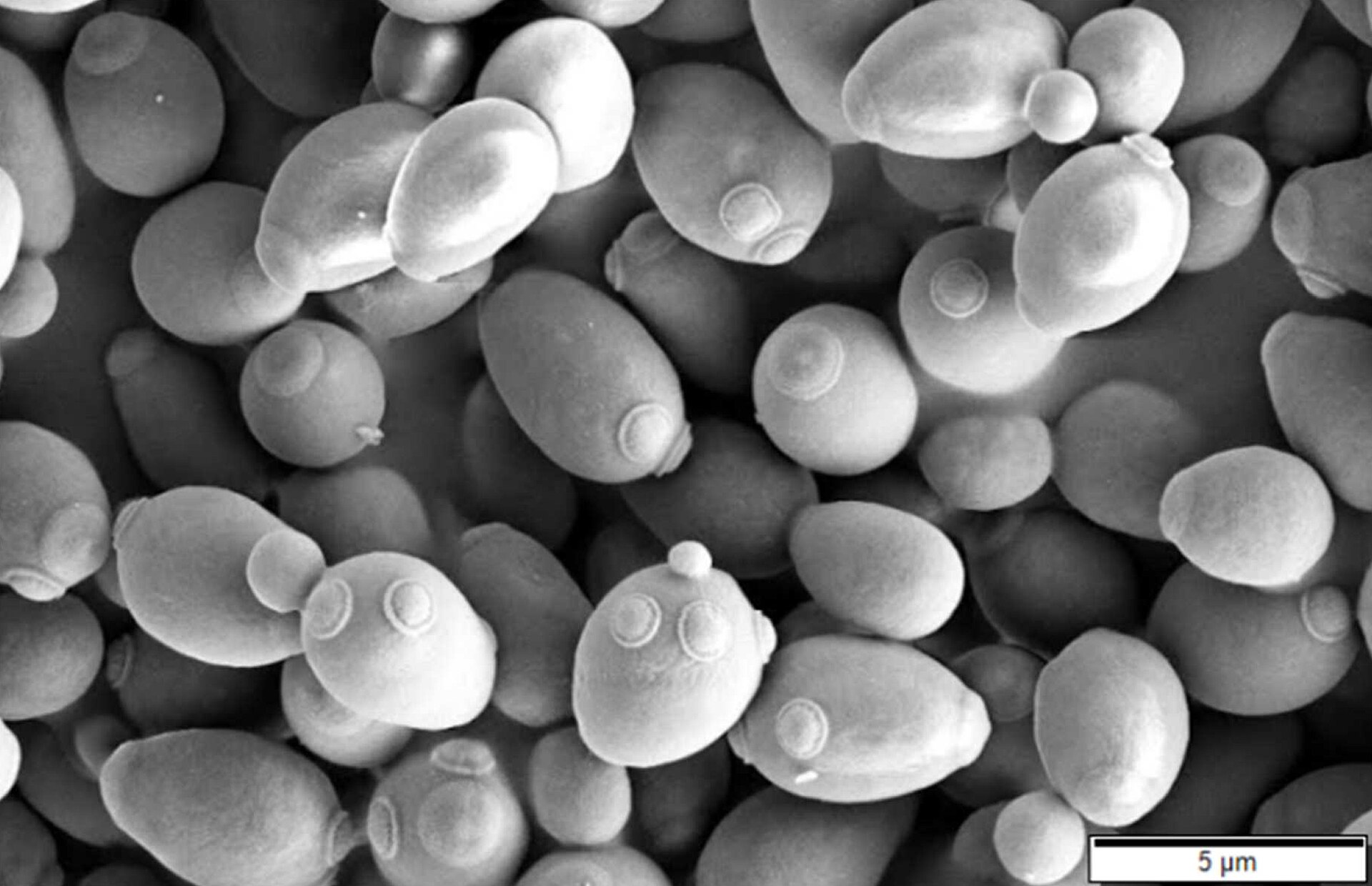
What Is Saccharomyces cerevisiae?
Saccharomyces cerevisiae is a species of yeast that has been used by humans for thousands of years.
It is best known for its role in fermentation, baking and brewing.
In animal nutrition, however, selected strains of Saccharomyces cerevisiae are used for a very different purpose.
When viable yeast cells are supplied in sufficient quantities, specific strains can be used as zootechnical feed additives intended to support the microbial environment of the digestive tract.
This is particularly interesting in horses because of their dependence on microbial fermentation.
Why the Horse Depends on Microorganisms
Horses are hindgut fermenters.
Unlike humans, they cannot independently break down significant quantities of the structural carbohydrates present in grass and hay.
Instead, they rely on microorganisms living primarily in the caecum and colon.
These microorganisms ferment fibre and generate volatile fatty acids such as:
- acetate,
- propionate,
- and butyrate.
The horse can subsequently absorb and utilise these fermentation products as energy sources.
This creates an extraordinary biological partnership:
The horse feeds the microbiome — and the microbiome helps feed the horse.
Maintaining an appropriate environment for these microorganisms is therefore an important component of equine nutrition.
What Makes MUCL 39885 Different?
This is where specificity becomes important.
"Yeast" is not a single nutritional ingredient with universally identical properties.
Different species and different strains can behave differently.
MUCL 39885 identifies a specific strain of Saccharomyces cerevisiae.
In the European Union, Saccharomyces cerevisiae MUCL 39885 is authorised as a zootechnical feed additive under identification number 4b1710.
Its functional classification is:
Gut flora stabiliser.
For horses, the EU authorisation specifies viable cells of the strain and a minimum inclusion level in complete feedingstuff.
That distinction matters.
Rather than using a generic yeast ingredient, MUCL 39885 represents a clearly identified strain that has undergone regulatory and scientific evaluation.
What Does the Science Show?
One particularly relevant study investigated this exact strain in mature horses.
Researchers studied six Standardbred mares receiving a high-fibre diet with or without supplementation of live Saccharomyces cerevisiae MUCL 39885.
The supplemented horses received:
4.6 × 10¹⁰ colony-forming units (CFU) per day.
The researchers then examined apparent nutrient digestibility.
The results were particularly interesting for fibre utilisation.
Supplementation with MUCL 39885 was associated with significantly greater apparent digestibility of:
| Fraction | With MUCL 39885 | Without |
|---|---|---|
| Dry Matter | 64.5% | 60.1% |
| Organic Matter | 66.1% | 61.6% |
| Neutral Detergent Fibre | 42.5% | 35.9% |
| Acid Detergent Fibre | 36.5% | 28.0% |
The researchers concluded that supplementation with live yeast significantly improved digestion of the fibre fractions of the diet.
This does not mean that live yeast transforms every horse's digestion or that supplementation can compensate for inappropriate feeding.
But it provides valuable evidence that this specific strain can influence how efficiently horses utilise a high-fibre diet.
Why Fibre Digestion Matters
Fibre is not simply something that keeps the digestive tract moving.
For the horse, fibre is fundamental nutrition.
Quality forage provides:
- structural carbohydrates,
- energy,
- prolonged chewing activity,
- saliva production,
- and substrate for microbial fermentation.
Efficient utilisation of fibre therefore matters for much more than manure consistency.
It contributes to the entire nutritional system of the horse.
A microbial environment capable of efficiently fermenting forage helps the horse extract nutritional value from the diet it evolved to consume.
This is one reason why supporting hindgut fermentation is particularly relevant for performance horses.
Live Yeast and the Equine Microbiome
The microbiome should not be thought of as a fixed collection of bacteria.
It is a dynamic ecosystem.
Diet, forage, starch intake, environmental changes and other management factors can influence microbial populations and fermentation.
Live yeast supplementation has therefore become an interesting area of equine nutritional research.
Rather than supplying energy directly to the horse, the nutritional concept is different:
Support the environment in which fibre-fermenting microorganisms operate.
Research across equine nutrition suggests that selected live yeasts may influence fermentation conditions and fibre utilisation, although effects depend on strain, dose, diet and individual circumstances.
This is why strain-specific evidence matters.
A Probiotic Is Not the Same as a Prebiotic
These terms are frequently confused.
A probiotic generally refers to live microorganisms administered in adequate quantities with the intention of producing a beneficial effect.
A prebiotic, by contrast, is a substrate that can be utilised by microorganisms.
Live Saccharomyces cerevisiae therefore represents a fundamentally different nutritional strategy from supplying fermentable fibres alone.
Modern digestive formulations may use multiple approaches because the gastrointestinal system itself is multifactorial.
Stomach Health and Hindgut Health Are Not the Same Thing
This distinction is particularly important.
A horse can have problems involving the stomach without having the same problem in the hindgut — and vice versa.
The stomach and hindgut perform very different biological functions.
The stomach is involved in the early stages of digestion and is continuously exposed to gastric acid.
The hindgut, meanwhile, contains the enormous microbial fermentation system responsible for processing fibre.
For that reason, we believe modern digestive nutrition should avoid treating "gut health" as one single process.
Gastric support and hindgut support are different — but complementary — concepts.
Why Performance Horses Deserve Special Attention
Performance horses experience management conditions that can differ considerably from the continuous grazing behaviour for which the equine digestive system evolved.
Depending on the individual horse and discipline, these may include:
- transportation,
- competition,
- concentrate feeding,
- changes in forage,
- altered feeding schedules,
- periods away from the home stable,
- and intensive training.
This does not automatically mean that the microbiome becomes unhealthy.
But it demonstrates why consistency in feeding and digestive management deserves particular attention in equine athletes.
The foundation remains simple:
Forage first.
No supplement should replace appropriate forage intake, clean water, good feeding management or veterinary care.
Why We Use MUCL 39885 in VetGen GastroBalance
When developing GastroBalance, we did not want to formulate another product focused exclusively on the stomach.
We wanted to think about digestive support more broadly.
That meant considering both the gastric environment and what happens further along the gastrointestinal tract.
Saccharomyces cerevisiae MUCL 39885 was selected because it fits that philosophy.
It is:
strain-specific, scientifically investigated in horses, and authorised in the EU as a gut flora stabiliser.
Within GastroBalance, it sits alongside other carefully selected nutritional components as part of a multi-dimensional approach to equine digestive support.
The objective is not to include as many ingredients as possible.
It is the opposite.
Every ingredient must earn its place.
Can Live Yeast Replace Good Feeding Management?
No.
And this is perhaps the most important point.
Even the most sophisticated digestive supplement cannot compensate for fundamentally inappropriate management.
Supporting equine digestive health starts with:
- Adequate forage.
- Regular access to feed.
- Clean water.
- Gradual dietary changes.
- Appropriate concentrate intake.
- Veterinary assessment when digestive disease is suspected.
Supplements belong on top of that foundation — not underneath it.
Is MUCL 39885 Safe for Horses?
The European Food Safety Authority has specifically evaluated Saccharomyces cerevisiae MUCL 39885 for use in horses.
In its assessment for renewal of authorisation, EFSA concluded that the additive remained safe for the target species, consumers and the environment under the authorised conditions of use.
The strain is also considered suitable for the Qualified Presumption of Safety approach used by EFSA.
As with many microbial feed additives in concentrated form, occupational handling of the raw additive requires appropriate precautions because of potential skin, eye and respiratory sensitisation.
For horse owners, however, the relevant point is that the strain has undergone formal European regulatory assessment for its intended use in animal nutrition.
Frequently Asked Questions
Is Saccharomyces cerevisiae MUCL 39885 a probiotic?
It is a live yeast strain used as a zootechnical feed additive. Within EU feed legislation, MUCL 39885 is specifically classified in the functional group of gut flora stabilisers.
Is all Saccharomyces cerevisiae identical?
No. Strain identity matters. Scientific findings obtained with one strain should not automatically be assumed to apply identically to every Saccharomyces cerevisiae product.
Does live yeast treat gastric ulcers?
No. Live yeast supplementation is a nutritional strategy and should not be presented as a treatment for Equine Gastric Ulcer Syndrome. Suspected gastric disease requires veterinary diagnosis and appropriate treatment.
Why use yeast in a gastric product?
Because the equine digestive system extends far beyond the stomach. GastroBalance was designed around a broader digestive philosophy that considers gastric support alongside hindgut function.
Can live yeast replace forage?
Absolutely not. Forage remains fundamental to normal equine digestive physiology and microbial fermentation.
The Bigger Picture: From Gastric Support to Digestive Health
Our understanding of equine nutrition is changing.
For decades, digestive health was often simplified into individual problems:
- The stomach.
- Acid.
- The hindgut.
- Manure.
Today, research increasingly allows us to look at the digestive tract as a connected biological system.
The microbiome is an important part of that system.
And ingredients such as Saccharomyces cerevisiae MUCL 39885 demonstrate why modern formulation should go beyond simply asking:
"What ingredients can we add?"
A better question is:
"Why is this ingredient here?"
For MUCL 39885, there is a clear answer.
It is a specifically identified live yeast strain with equine research behind it, a defined role in European feed legislation and a logical place within a nutritional strategy designed to support the horse's digestive ecosystem.
That is why we chose it for VetGen GastroBalance.
Because at VetGen, complexity is never the objective.
Purpose is.
Scientific References
- Agazzi A, Ferroni M, Fanelli A, Maroccolo S, Invernizzi G, Dell'Orto V, Savoini G. Evaluation of the Effects of Live Yeast Supplementation on Apparent Digestibility of High-Fiber Diet in Mature Horses Using the Acid Insoluble Ash Marker Modified Method. Journal of Equine Veterinary Science. 2011;31(1):13–18.
- European Food Safety Authority (EFSA), FEEDAP Panel. Assessment of the application for renewal of authorisation of Biosprint® (Saccharomyces cerevisiae MUCL 39885) for dairy cows and horses. EFSA Journal. 2019;17(11):5915.
- European Commission. Commission Implementing Regulation (EU) 2020/1096 concerning the renewal of the authorisation of Saccharomyces cerevisiae MUCL 39885 as a feed additive for dairy cows and horses.
- European Union Reference Laboratory for Feed Additives. Saccharomyces cerevisiae MUCL 39885 — Feed Additive Identification 4b1710.
VetGen Academy — Science. Nutrition. Performance.
The information provided in the VetGen Academy is intended for educational purposes and does not replace veterinary diagnosis or treatment.