
For many years, horse owners viewed the digestive system as little more than the place where food was broken down into nutrients. Today, science tells a very different story.
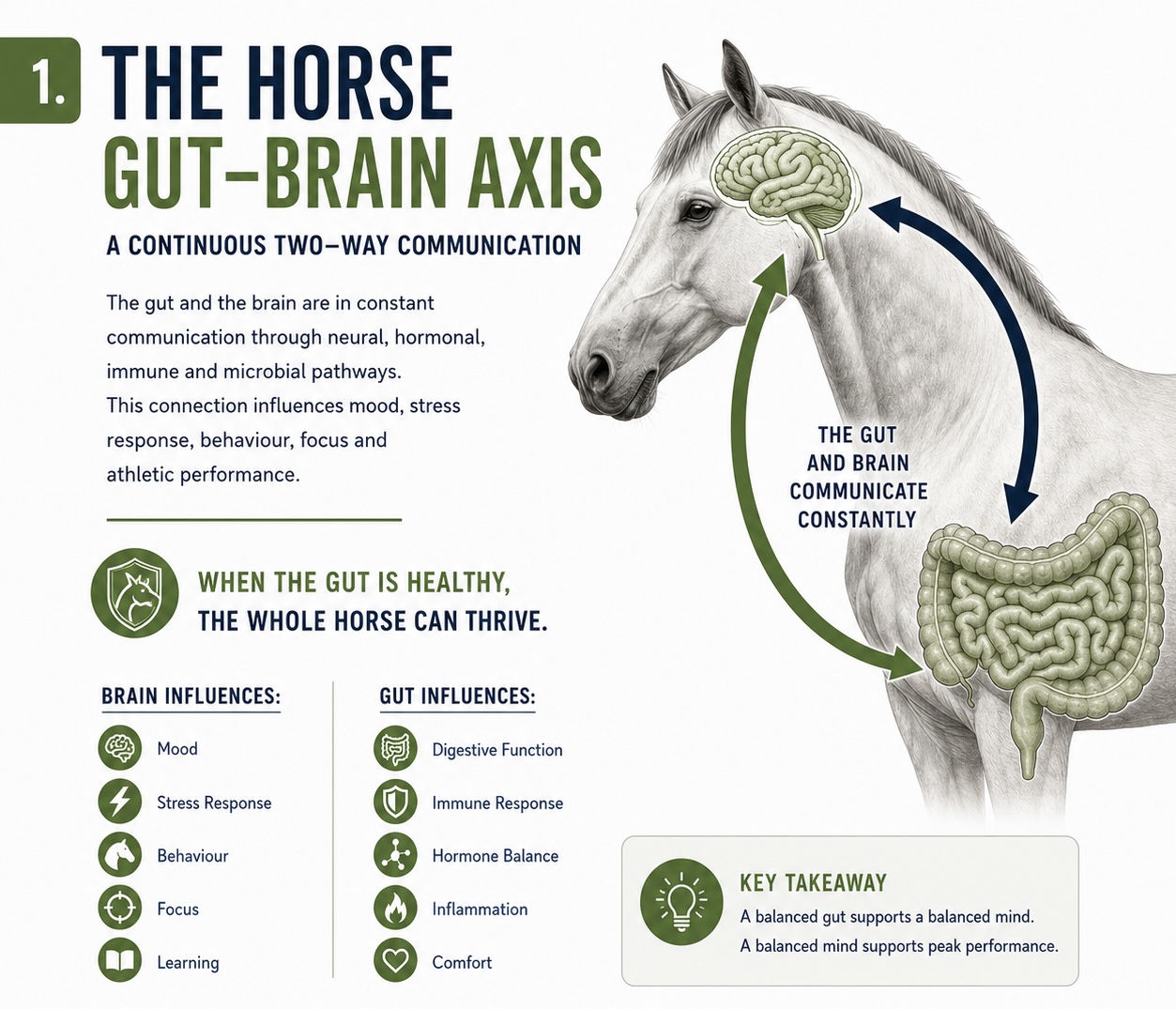
The gastrointestinal tract is far more than a digestive organ. It is an active communication centre that constantly exchanges information with the brain. This relationship is known as the Gut-Brain Axis.
Although much of the scientific understanding has originated from human medicine, growing evidence suggests that similar biological communication exists in horses. Behaviour, stress, recovery, focus — even confidence — may all be influenced by what happens inside the digestive system.
Performance does not begin in the arena. It begins long before. It begins within.
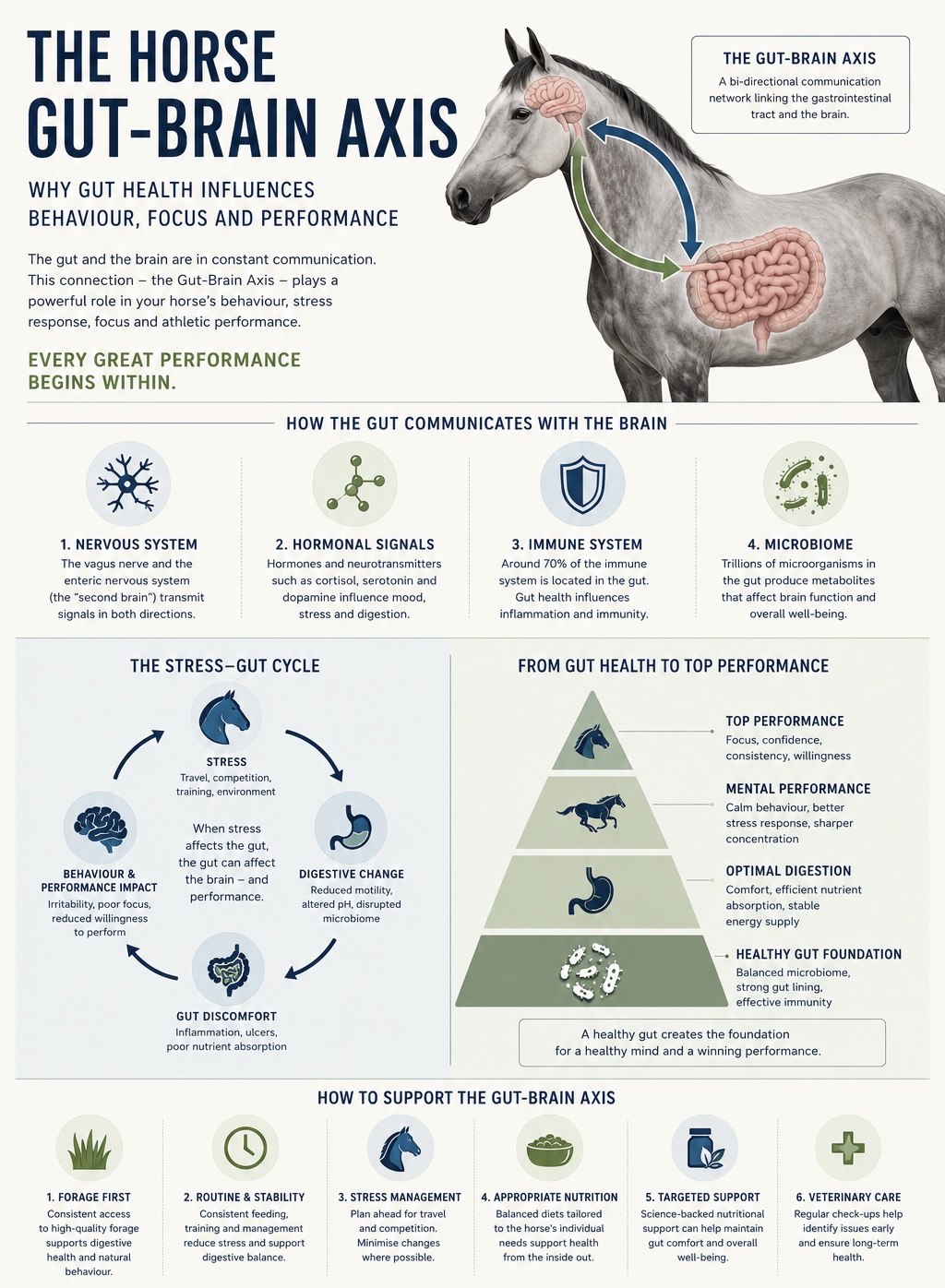
What Is the Gut-Brain Axis?
The Gut-Brain Axis describes the continuous communication between the gastrointestinal tract and the central nervous system. Rather than operating independently, the gut and the brain constantly exchange signals through:
- The nervous system
- Hormones
- The immune system
- The gut microbiome
Together, these systems help regulate digestion, metabolism, stress responses and behaviour.
The Horse Microbiome
Inside every horse lives an extraordinary ecosystem. Trillions of bacteria, fungi and other microorganisms inhabit the digestive tract. Together they form the equine microbiome. When balanced, it supports:
- Efficient fibre digestion
- Energy production
- Nutrient absorption
- Immune function
- Gastrointestinal integrity
When that balance becomes disrupted, digestive efficiency may decline and gastrointestinal health can be compromised.
How the Gut Communicates with the Brain
The Nervous System. The enteric nervous system, often called the body's "second brain," contains millions of nerve cells responsible for regulating digestion and communicating with the central nervous system.
Hormonal Signalling. Stress hormones such as cortisol influence gastrointestinal function. The digestive tract also produces signalling molecules that affect metabolism and physiological regulation.
Immune Function. Approximately seventy percent of the horse's immune tissue is associated with the digestive tract. A healthy gut contributes to balanced immune function.
Stress and the Digestive System
Competition places unique demands on horses — travel, new environments, changes in feeding routines, reduced forage intake and intensive training. Research shows that stressful situations can alter digestive physiology and increase the risk of gastric irritation in susceptible horses.
This creates an important cycle: stress may influence digestive health, and compromised digestive health may affect comfort, appetite and behaviour. Supporting gastrointestinal health therefore becomes an important component of performance management.
Could Gut Health Influence Behaviour?
Behaviour is complex. Training, management, pain, environment, genetics and nutrition all contribute. However, growing scientific interest suggests that the gut microbiome may also play a role in regulating behaviour through the Gut-Brain Axis.
Modern equine science increasingly considers digestive health and behaviour as closely connected rather than separate topics.
Why This Matters for Performance Horses
Elite performance requires more than physical fitness. Successful horses must remain:
- Comfortable
- Focused
- Confident
- Consistent
Digestive discomfort can influence appetite, recovery, behaviour and willingness to perform. That is why professional riders increasingly view gastrointestinal health as part of overall performance preparation.
Supporting the Gut-Brain Axis
No supplement can replace excellent management. The strongest foundation always includes:
Consistent Forage Intake. Continuous access to forage supports normal digestive physiology.
Stable Feeding Routines. Sudden dietary changes should be avoided whenever possible.
Stress Management. Careful travel planning, consistent routines and thoughtful competition preparation may help minimise unnecessary stress.
Appropriate Nutrition. Balanced diets designed to meet the horse's individual requirements remain essential.
Targeted Supplementation. Where appropriate, evidence-informed nutritional support may complement an overall digestive health programme.
The VetGen Perspective
At VetGen, we believe the future of equine nutrition lies in understanding — not simply treating symptoms. The Gut-Brain Axis demonstrates that the digestive system influences far more than digestion alone.
When we better understand the biological connections between gut health, behaviour and performance, we can make better decisions for our horses. Our ambition is not simply to support digestion. It is to help horses reach their full potential.
Every Great Performance
Begins Within.
Key Takeaways
- The Gut-Brain Axis describes communication between the digestive system and the brain.
- A healthy gut supports digestion, immunity and overall wellbeing.
- Stress may influence gastrointestinal function and digestive comfort.
- Gut health and behaviour are increasingly recognised as interconnected.
- Long-term performance begins with long-term health.
- Nutrition should always complement excellent management and veterinary care.
Frequently Asked Questions
What is the Horse Gut-Brain Axis?
The Gut-Brain Axis refers to the biological communication between the digestive system and the brain through nervous, hormonal, immune and microbial pathways.
Does gut health influence horse behaviour?
Behaviour is influenced by many factors. Emerging research suggests that gut health may also contribute through the Gut-Brain Axis.
Why is gut health important for performance horses?
Healthy digestion supports nutrient utilisation, comfort, immune function and overall wellbeing — all foundations for consistent athletic performance.
Can stress affect the horse's digestive system?
Yes. Competition, travel and changes in routine may influence gastrointestinal physiology, which is why careful management and nutrition are important.
Can nutrition support the Gut-Brain Axis?
Balanced nutrition, consistent forage intake and appropriate digestive support can contribute to maintaining gastrointestinal health.
Scientific References
- Padalino, B. (2015). Effects of the Different Transport Phases on Equine Health Status, Behavior and Welfare.
- Harris, P. & Ellis, A. Equine Applied and Clinical Nutrition.
- National Research Council. Nutrient Requirements of Horses.
- Julliand, V. & Grimm, P. The Impact of Diet on the Equine Gut Microbiome.
- Steelman, S. M. et al. Equine Gut Microbiota Research.
- Salem, S. E. et al. The Equine Intestinal Microbiome and Its Relationship to Health and Disease.
Final Thoughts
For many years, equine nutrition focused primarily on supplying energy and nutrients. Today, science reveals a far more complex picture. The digestive system is deeply connected to the horse's overall health, comfort and ability to perform.
Understanding these connections shifts our focus from reacting to problems towards building stronger foundations for lifelong health and performance. At VetGen, this belief guides everything we do — because every horse deserves the opportunity to reach its full potential.